Behind every strong hedge fund is an equally strong operational infrastructure. Investors mainly experience hedge funds through performance results, risk disclosures, and reporting. Behind these visible outputs sits a complex operational infrastructure that ensures every trade, valuation, and report is accurate and reliable. This “backstage” framework is what enables the “frontstage” investment activity to function smoothly.
In a hedge fund context, operational infrastructure refers to the integrated systems, processes, controls, and service providers that support trading, risk management, valuation, investor servicing, and regulatory compliance beyond the investment strategy itself. It is the mechanism that turns investment decisions into validated, reportable, and controlled outcomes.
Strong operations are essential. Without disciplined infrastructure, even the best investment strategy can be undermined by settlement failures, reconciliation issues, valuation errors, or reporting breakdowns. Operational failures often create more lasting damage than market losses.
As strategies become more complex and data intensive, operational strength has become a core driver of scalability, resilience, and investor confidence. In today’s environment, operational excellence is no longer a supporting function—it is a central determinant of long-term performance and institutional credibility.
Hedge Fund Operations Explained
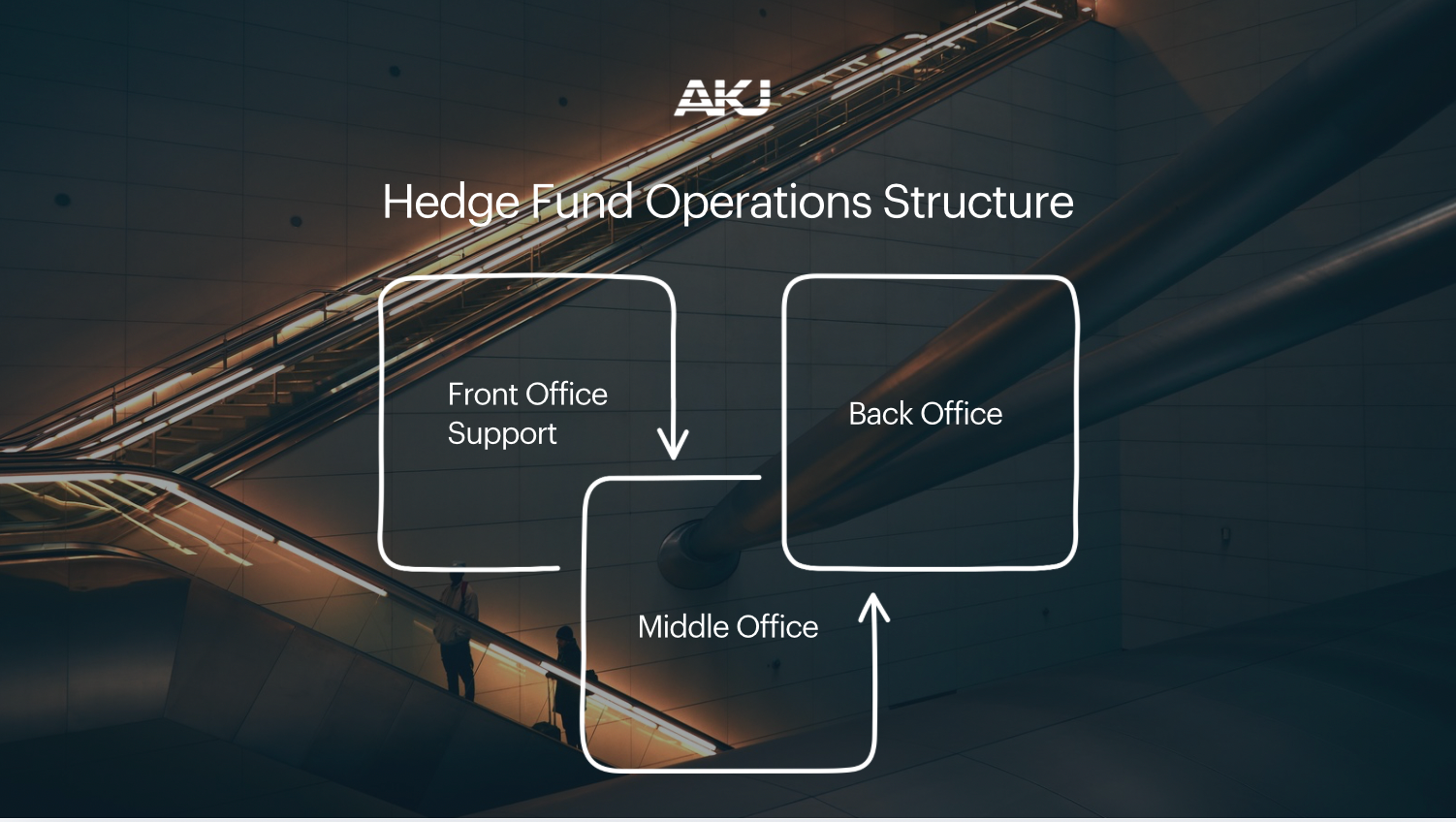
Hedge fund operations encompass the systems, processes, and controls that sit behind trading activity and convert portfolio decisions into verified, reportable outcomes.
They are typically structured across three interconnected areas:
- Front office support – trade capture, execution oversight, liquidity and collateral monitoring
- Middle office – risk aggregation, exposure monitoring, Profit & Loss validation, reconciliation
- Back office – settlement, fund accounting, Net Asset Value (“NAV”) production, reporting and control
These functions operate together to ensure that strategy execution translates into accurate portfolio accounting and transparent investor communication.
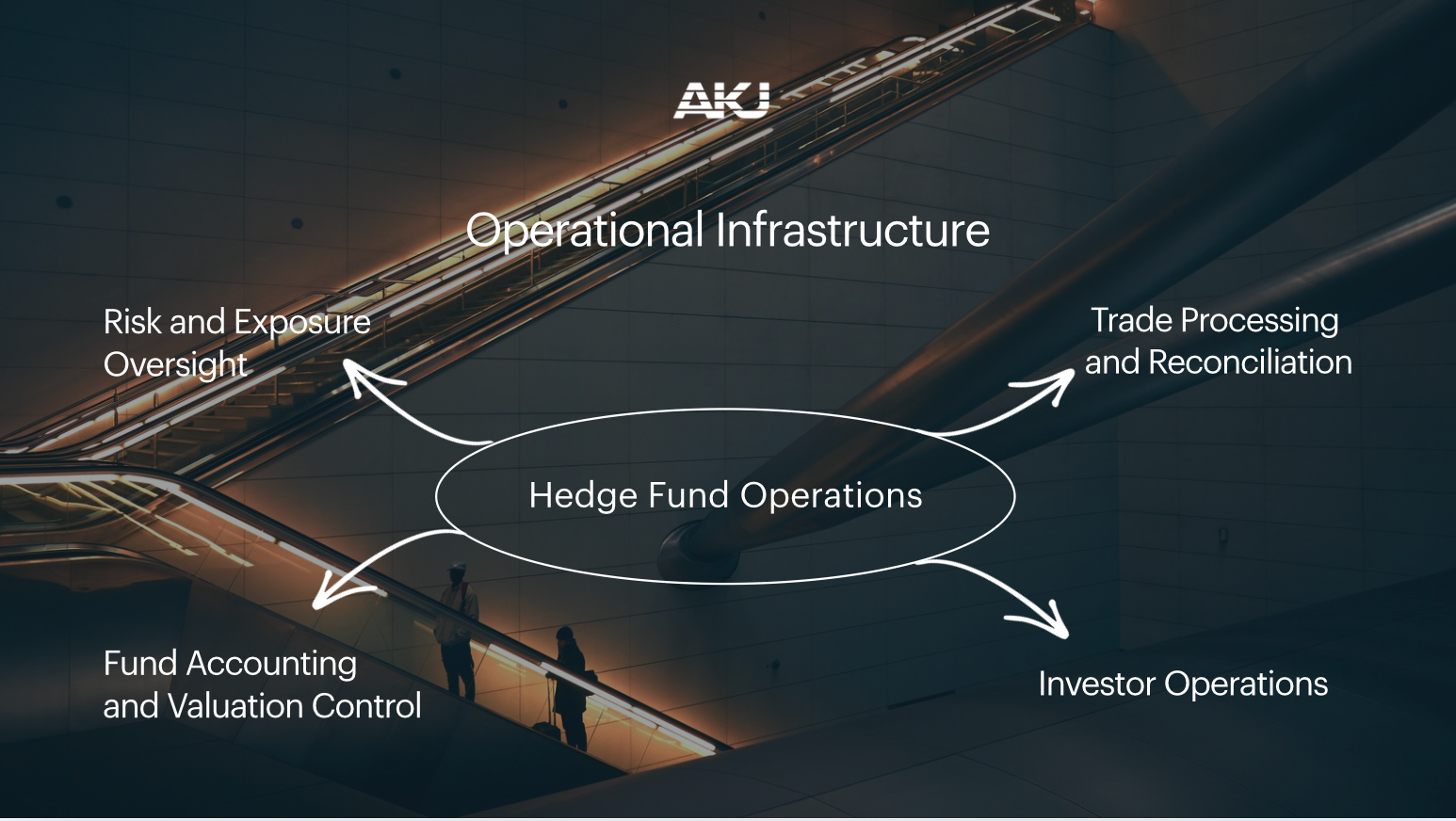
What Key Functions Exist in Hedge Fund Operations?
Operational infrastructure is built around several critical control layers:
Trade Processing and Reconciliation
- Trade booking and confirmation
- Cash and position reconciliation
- Break identification and resolution
- Counterparty coordination
Accuracy at this level prevents systemic errors from cascading into reporting failures.
Risk and Exposure Oversight
- Aggregated exposure monitoring
- Leverage and liquidity tracking
- Counterparty risk monitoring
- Independent performance validation
This provides a control layer separate from portfolio decision-making.
Fund Accounting and Valuation Control
- NAV data validation
- Pricing oversight
- Fee and expense accrual monitoring
- Capital account maintenance
Reliable accounting underpins investor confidence and performance measurement.
Investor Operations
- Subscription and redemption processing
- Capital activity coordination
- Investor reporting
- Due diligence support
Investor confidence depends directly on operational precision.
What Are Common Challenges in Hedge Fund Operations?
Hedge fund operational management has become more complex over the past decade. The main challenges include:
Regulatory Pressure
Expanding reporting requirements, transparency standards, and compliance expectations increase operational burden and documentation demands.
Technological Strain
Multi-asset and derivatives-heavy strategies require:
- Advanced reconciliation systems
- Real-time exposure visibility
- Order Management System (“OMS”)/Execution Management System (“EMS”)
- Collateral tracking infrastructure
Legacy systems struggle to scale with this complexity.
Data Fragmentation
Data frequently sits across:
- Prime brokers
- Custodians
- Internal systems
- Administrators
Without integration, reporting delays and control gaps emerge.
Cybersecurity and Operational Resilience
Operational infrastructure must protect:
- Sensitive investor data
- Trading models
- Financial transaction flows
Digital resilience is now a core operational requirement.
Benefits of Strong Hedge Fund Operations
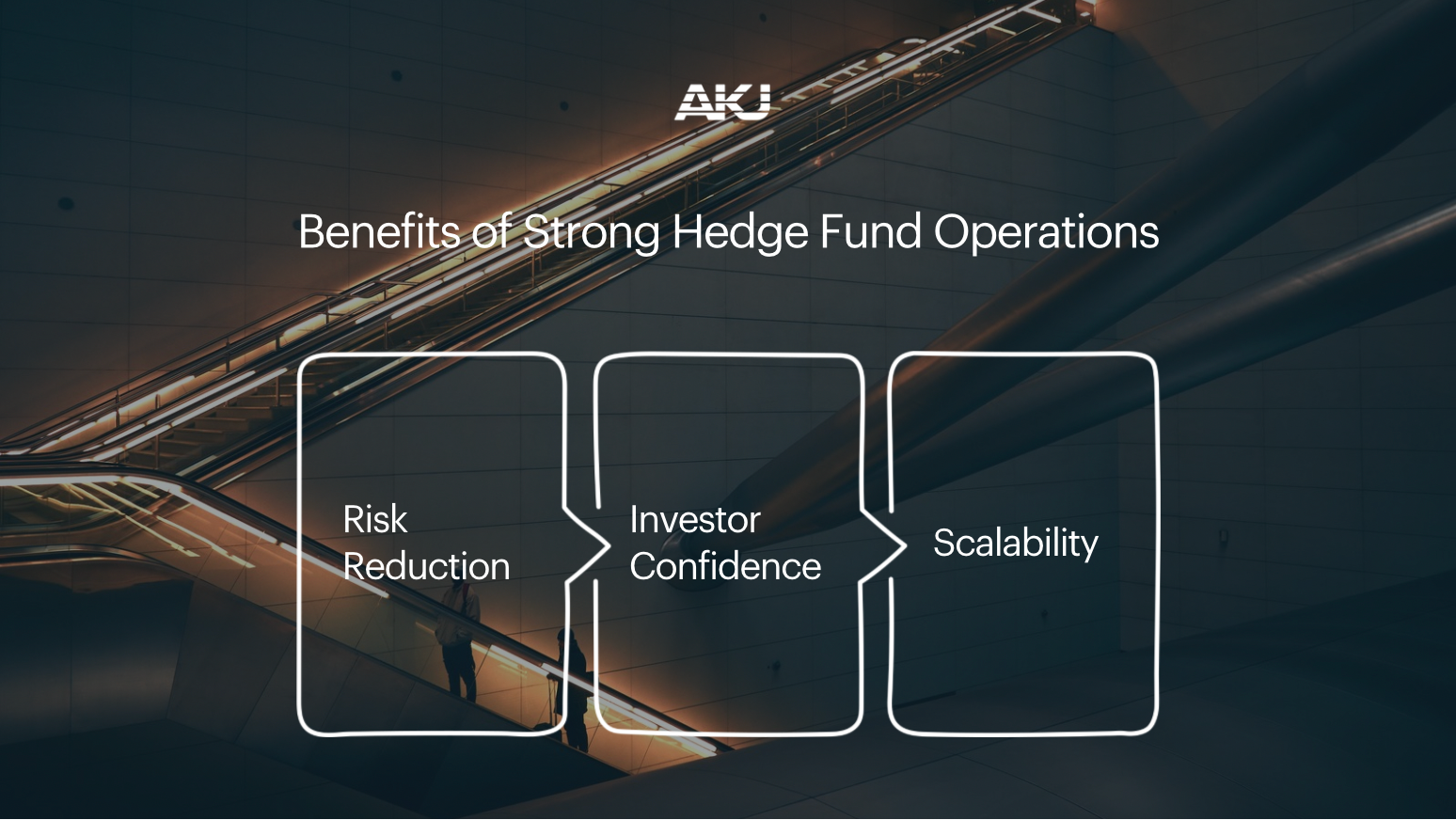
When properly structured, operational infrastructure delivers measurable advantages.
Risk Reduction
Operational controls reduce exposure to:
- Settlement failures
- Reconciliation breaks
- Incorrect NAV reporting
- Liquidity mismatches
Operational risk can be as damaging as market risk.
Investor Confidence
Institutional allocators conduct detailed operational due diligence. A robust infrastructure demonstrates discipline, transparency, and governance maturity.
Scalability
Efficient systems allow funds to:
- Scale Asset Under Management (“AUM”) without proportional headcount growth
- Improve reporting speed
- Reduce manual intervention
Operational leverage becomes a structural advantage.
How Platform Models Optimise Hedge Fund Operations
While some managers outsource discrete functions, platform models provide a unified operating framework that centralises infrastructure, coordination, and service integration.
Platform-based operating models can provide:
Cost Efficiency
- Reduced fixed overhead
- Scalable operational models
- Elimination of redundant systems
Access to Institutional Infrastructure
- Integrated risk and reporting systems
- OMS/EMS connectivity
- Data aggregation and reconciliation frameworks
Strategic Focus
With operational complexity managed externally, investment teams can focus on:
- Portfolio construction
- Risk management
- Capital development
Unlike standalone outsourcing arrangements, platform models centralise infrastructure, coordination, and service integration within a unified operating structure.
Selecting an Operational Infrastructure Platform
Choosing the right operational platform requires careful assessment of infrastructure, controls, and scalability. Key considerations include:
Technology and Integration
- Real-time exposure visibility
- Seamless OMS/EMS connectivity
- Cross-asset data aggregation
- Cybersecurity and disaster recovery
Control and Transparency
- Independent reconciliation processes
- Audit-ready documentation
- Clear reporting frameworks
Scalability
- Multi-strategy support
- Multi-asset capability
- Growth adaptability
Integrated Service Provider Coordination
- Coordination of key third-party providers within a unified framework
- Integration with administrators, auditors, and compliance specialists
- Streamlined onboarding and reduced operational fragmentation
Platform models centralise infrastructure and service provider integration within a cohesive operating structure.
Why Strategy and Technology Must Align
Investment strategy defines return objectives. Operational systems determine whether trades, risk metrics, and investor reports are accurate and timely.
Infrastructure must support:
- Real-time exposure visibility
- Accurate reconciliation
- Timely investor reporting
- Collateral oversight
- Regulatory and reporting obligations
Breakdowns between trading systems, risk tools, and reporting processes introduce operational risk that can outweigh market risk.
For many managers, operating within a dedicated hedge fund platform structure provides institutional-grade infrastructure, integrated service coordination, and scalable operating capacity without building and maintaining internal systems.
Key Takeaways
- Hedge fund operations are the infrastructure behind performance and reporting.
- Operational complexity has increased alongside regulatory and technological demands.
- Weak infrastructure introduces material operational risk.
- Outsourcing can provide scalability and institutional-grade systems.
- Operational strength directly influences investor confidence and long-term growth.
Final Thoughts
Hedge fund operations are no longer a secondary consideration. As strategies become more complex and reporting standards increase, operational infrastructure directly influences risk control, investor confidence, and scalability.
Performance attracts capital. Operational discipline retains it.
Operational platforms built to support institutional managers centralise infrastructure, integrate service providers, and embed control frameworks designed for scale.
If you are evaluating how to strengthen or scale your hedge fund operations, contact AKJ to discuss how an integrated operational platform can support your fund’s growth and control framework.
Alternatively, explore our platform services to understand how institutional infrastructure can be implemented without building it internally.